

In Ukraine, new approaches to water resource management in the agricultural sector are actively being implemented. To date, 78 water user organizations (WUOs) have been established, taking on the responsibility for modernizing and restoring irrigation infrastructure. This process is most intense in the Cherkasy (21 WUOs) and Odesa (18 WUOs) regions, where the stability of harvests largely depends on quality irrigation.
This is reported by Business • Media
Reforming the Irrigation System: A New Approach to Management
The issues of reforming water management and the role of the state in this process were discussed by participants at the IV Irrigation Forum “Smart Irrigation: Technologies and Efficiency,” held in Poltava region. Deputy Minister of Economy, Environment, and Agriculture Iryna Ovcharenko emphasized that the goal of the reform is to create not only support mechanisms but also an effective economic system for attracting investments. The ministry stresses that WUOs are becoming new operators of water resources, gradually transitioning from a centralized management model to local self-governance.
“It is the WUOs that are becoming the new ‘water operators’, changing the approach from centralized management to local self-governance.”
Increased State Support and New Financial Opportunities for Farmers
In 2026, the Ukrainian government significantly expanded financial support instruments for irrigation, especially for regions with increased risks. The main parameters of the new policy are:
- Compensation for the costs of constructing and repairing irrigation systems has increased to 80% (previously 50%);
- The maximum support is 26,500 UAH per hectare;
- The total budget of the program is 196.7 million UAH.
Funding now covers the full cycle of irrigation works—from reconstruction to the creation of new networks, not just pumping stations. In addition, the ministry announced further expansion of support programs: for frontline territories, up to 48,000 UAH/ha is provided, while for other regions, up to 30,000 UAH/ha. This creates a new economic model in which investments in irrigation are more secure due to state guarantees.
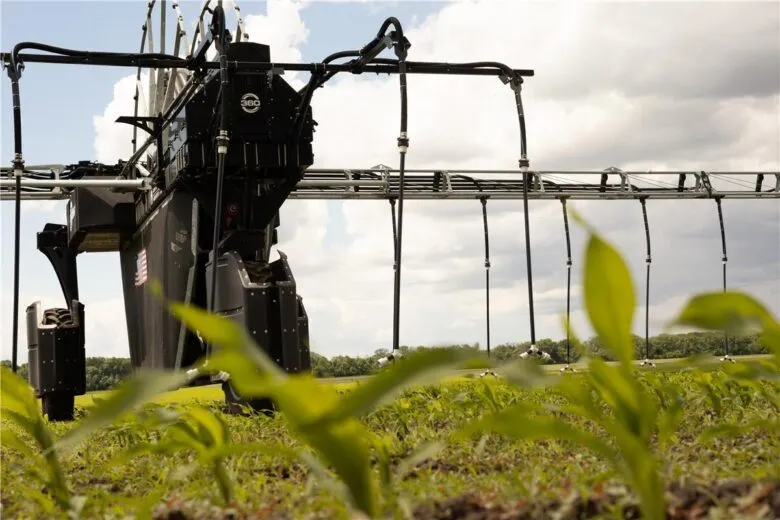
During the forum, the water user organization “Dzheryelo 1” demonstrated the results of implementing new technologies. The use of three autonomous 360 RAIN systems allowed for an increase in irrigated area from 241 to 435 hectares, reduced water consumption by 50–75%, and transitioned to precise and resource-efficient irrigation.
Overall, the transformation of the irrigation system in Ukraine goes beyond mere institutional changes and forms a new ecosystem where water users become full-fledged managers of infrastructure, while the state acts as a partner in financing and regulation. This gradually shifts the agricultural sector to a model where effective irrigation determines the competitiveness and sustainability of production in the face of climate and wartime challenges.
The state continues to expand support tools for the agricultural sector in frontline and war-affected areas, focusing on preserving production, stabilizing farmers’ incomes, and supporting relocated businesses.