

- Researchers are using artificial intelligence to uncover historical ciphers that have long remained unsolved.
- Among the already deciphered documents are medical prescriptions, diplomatic correspondence, and love letters.
- Scientists expect that AI will provide access to numerous encrypted archives in various countries around the world.

Modern AI-based tools are playing an increasingly important role in the study of historical manuscripts. Cutting-edge technologies are helping researchers decode ancient codes that have remained inaccessible to science for centuries.
This is reported by Business • Media
Experts estimate that about 1% of archival materials in libraries around the world are fully or partially encrypted. Among them are diplomatic correspondence, medical treatises, documents of secret organizations, and private correspondence.
Unveiling the Secrets of the Borg Cipher
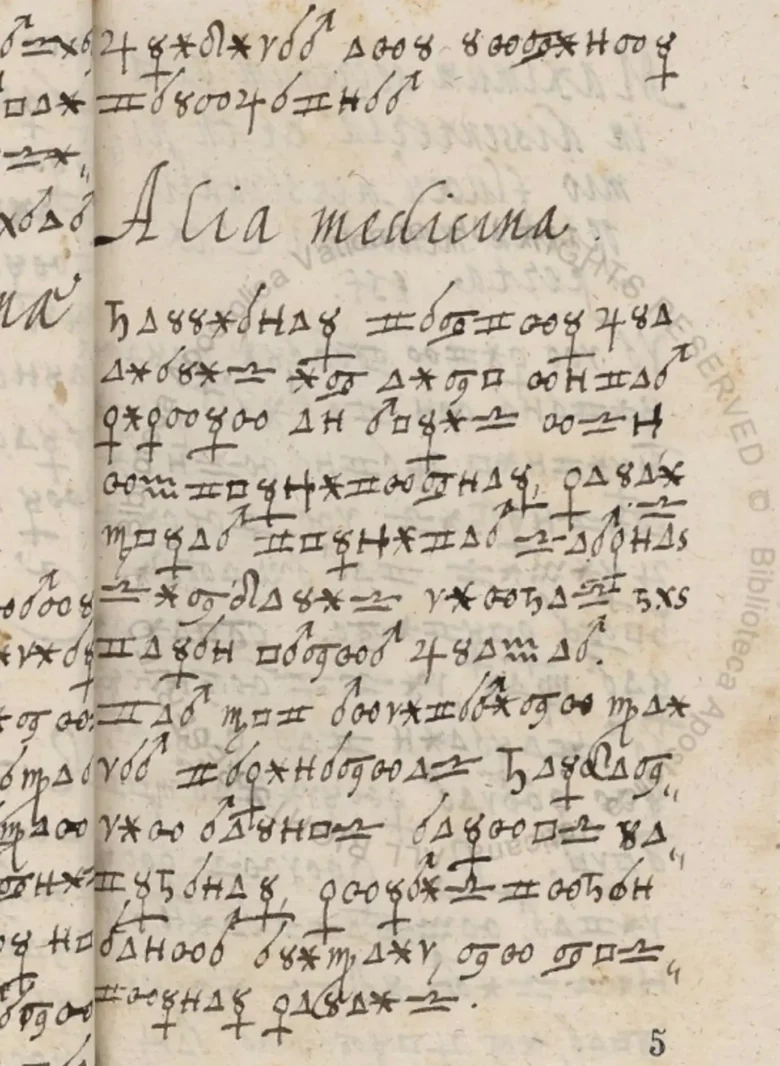
One of the most striking examples is a manuscript known as the Borg cipher, created in the 17th century. This mysterious document has been preserved in the archives of the Vatican Library for over 400 years. Its text is written using dozens of special symbols, and the key to its decryption has long remained unknown.
Thanks to machine learning methods, researchers were able to restore the content of the manuscript. It turned out that the document contains hundreds of medical advice and recipes, including treatments for dysentery, fever, and other ailments.
“Working with such documents resembles a detective investigation. Each symbol found gradually unveils the curtain over a long-lost world,” explained Beata Megesi, a professor of computational linguistics at Stockholm University.
AI Capabilities for Historians and Cryptologists
In the past, deciphering such texts could take months or even years. For example, French cryptologists took about six months to decipher a three-page letter from Emperor Charles V, created over 500 years ago and written using 120 different symbols.
Modern AI systems significantly accelerate this process. They are capable of recognizing ancient handwriting, digitizing manuscripts, and detecting patterns in complex ciphers. These tools have already been used to analyze correspondence from the time of the Thirty Years’ War, messages from Mary Stuart, and other historical sources.
Currently, an international team of researchers within the Descrypt project is developing a universal system that will allow for the automatic recognition and decryption of handwritten texts without the need for manual processing.
Experts are confident that the implementation of artificial intelligence will reveal the contents of thousands of historical archives that remain inaccessible to humanity. Such technologies may also aid in the study of ancient writings, the meanings of which are still unknown to modern science.