

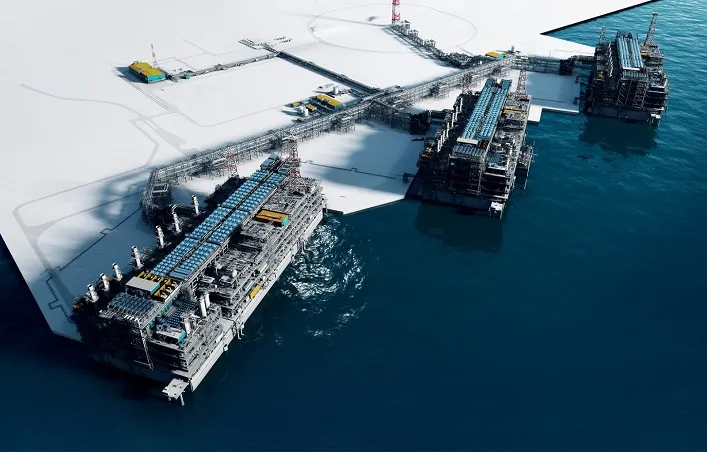
Russian liquefied natural gas (LNG) exports from January to October 2025 decreased by 3.4%, totaling 25.2 million tons. However, October saw a sharp increase in shipments — up by 21% to a record 3.4 million tons, attributed to the start of shipments from the sanctioned Arctic LNG 2 project. At the same time, U.S. sanctions have limited the access of Russian LNG to international markets; however, Russia has shifted its focus to exports to Asia, particularly to China.
This is reported by Business • Media
Sharp Decline in Supplies to the EU and Drop in Oil Product Exports
Supplies of Russian LNG to European Union countries decreased by 17.9% over ten months, reaching 11 million tons. In October, this figure fell further by 21% to 0.79 million tons. The situation with oil product exports from Russia has also worsened: in October, maritime exports reached their lowest level since the beginning of the full-scale war, amounting to 1.89 million barrels per day. The reasons for this collapse include mass shutdowns of oil refineries following attacks by Ukrainian drones and the tightening of international sanctions.
Increased Activity of Indian Companies and Changes in Transit Through Lithuania
India’s largest oil refining company, Indian Oil Corp (IOC), has resumed purchases of Russian oil for December 2025. The company acquired five batches that are not subject to sanctions, totaling about 3.5 million barrels of ESPO grade for delivery to an eastern Indian port. Additionally, the Indian plant Nayara Energy, which is controlled by Russia and operates exclusively on Russian oil, has increased its capacity utilization from 70-80% to 90-93% of its total capacity of 400,000 barrels per day following the imposition of EU sanctions.
“Meanwhile, the Lithuanian Railways (LTG), which previously transported oil products from the Russian company Lukoil in transit to the Kaliningrad region (Russia), announced that it would comply with U.S. and U.K. sanctions and cease such transportation.”
At the same time, negotiations are ongoing between Lithuanian energy companies (Amber Grid) and Russia (Gazprom) regarding the extension of the gas transit contract to Kaliningrad. The current contract expires in December, and the parties are discussing the possibility of shortening the agreement (from 10 years) and increasing the cost of transit services. Lithuania’s average revenue from gas transit from Belarus to Kaliningrad is about 12 million euros per year. Meanwhile, Lithuania halted imports of Russian gas for its own needs back in April 2022, leaving only transit operations.