


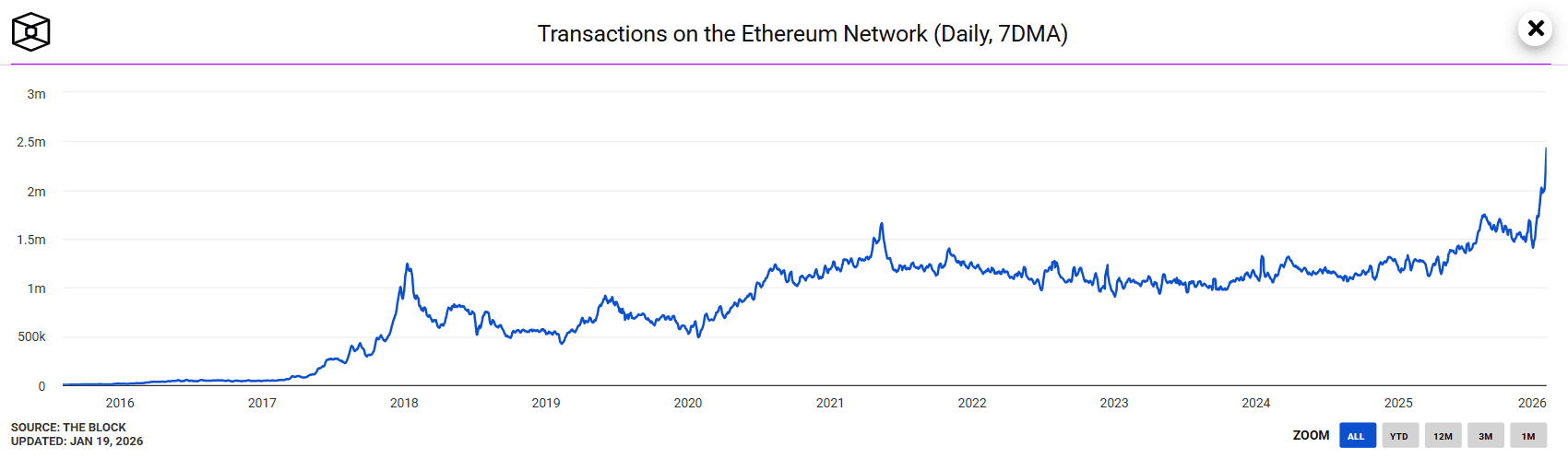
The Ethereum network has reached a new historical high in the number of transactions. As of January 17, 2025, the average 7DMA (seven-day moving average) stood at 2.43 million transactions per day.
This is reported by Business • Media
Increase in Activity and Decrease in Fees
The growth in the number of transactions on the network has been observed since mid-December 2025, when the Fusaka update was implemented. This update expanded the blob space and added PeerDAS (Peer Data Availability Sampling), significantly enhancing the network’s efficiency. The previous historical high for Ethereum was recorded back in May 2021.
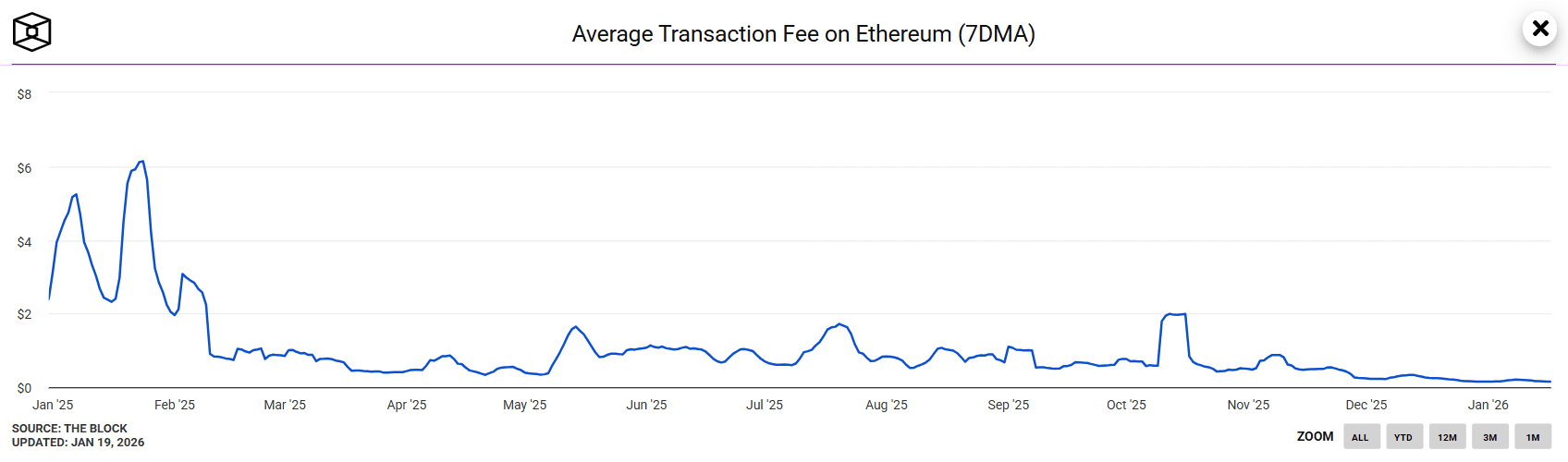
Interestingly, amidst the increase in activity, transaction fees have decreased. As of January 17, the average 7DMA gas fee dropped to $0.15, one of the lowest values in recent years. This has made using Ethereum even more accessible to a wider range of users.
Impact on Ethereum’s Inflation and Growth of New Wallets
The significant reduction in fees has contributed to increased user activity, but it has also affected the asset’s economy. In particular, the decrease in gas costs has reduced the volume of coin burning, weakening Ethereum’s deflationary effect. According to the Ultrasound Money portal, the annual growth rate of the coin’s supply has reached 0.8%. Meanwhile, the increase in the volume of assets in staking only exacerbates this trend.
“The rise in the number of new addresses indicates an influx of users, while the expansion of the gas limit reduces the load on the network and makes transactions more predictable in cost.”
Previously, the network also recorded a record increase in new wallets, further indicating a revival of the ecosystem at the foundational level. The combination of these changes points to further development and scaling of the Ethereum network, although not without certain risks associated with the weakening of the coin’s deflationary model.