

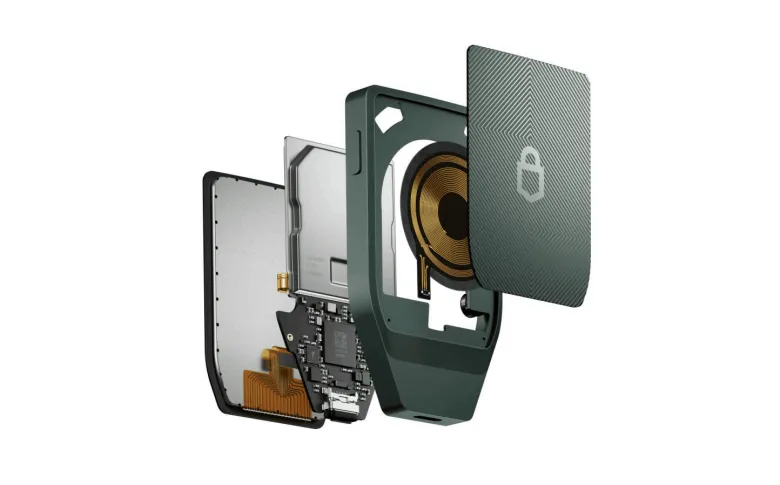
The Trezor Safe 7 hardware cryptocurrency wallet has won the prestigious international Red Dot Award 2026 in the product design category. This award is one of the most authoritative in the field of design, previously awarded to well-known companies such as Apple, Sony, and Dyson.
This is reported by Business • Media
Key Features of Trezor Safe 7
The new Trezor Safe 7 device features a touchscreen without physical buttons and operates on fully open-source software. Its foundation is the TROPIC01 chip with a transparent architecture that allows for public auditing. This ensures a high level of security and trust in the hardware solution.
The wallet is designed for offline storage of crypto assets and allows users to have complete control over their funds without the involvement of exchanges or third-party intermediaries. Trezor emphasizes simplifying the process of self-managing digital assets, which, according to them, is intended to attract a broader audience to the use of hardware wallets.

Design for a Broader Audience
The Red Dot jury, composed of approximately 40 international experts, evaluated devices based on criteria such as innovation, functionality, ergonomics, and build quality. The award ceremony will take place on July 7, 2026, in Essen.
The company emphasized that they aimed to make hardware wallets as understandable as possible for all users. Adam Budynski, head of the hardware division at Trezor, noted:
“For some people, the first impression of a hardware wallet is that it looks like a device for engineers. This deters them even before they learn what self-custody is,” said Adam Budynski, head of the hardware division at Trezor.
According to him, the Safe 7 was designed with the goal of overcoming this barrier. The victory at Red Dot confirmed that the device looks like a modern part of everyday technology and is user-friendly.
Despite the growing interest in self-custody of crypto assets, about 98% of users still rely on centralized exchanges and custodial services. The main obstacles remain the complexity of interfaces, concerns about the security of seed phrases, and the utilitarian appearance of devices.
Trezor believes that the combination of open-source software and intuitive design will help change this trend and accelerate the transition of users to self-custody and management of digital assets.