

Last week, the United States imposed new sanctions against two of Russia’s largest oil companies – Rosneft and Lukoil. These restrictions aim to reduce Moscow’s ability to finance military actions, particularly by complicating access for companies purchasing Russian oil to financial transactions in US dollars.
This is reported by Business • Media
Sharp Decline in Russia’s Revenues from Energy Resource Exports
According to data from January to September 2025, 86% of Russian crude oil exports were directed to China and India. If these markets were lost, Russia would be losing about $7.4 billion monthly. Already in September of this year, Russia’s revenues from fossil fuel exports fell to their lowest level since the beginning of the full-scale invasion of Ukraine.
The EU Remains the Main Buyer of Russian Gas
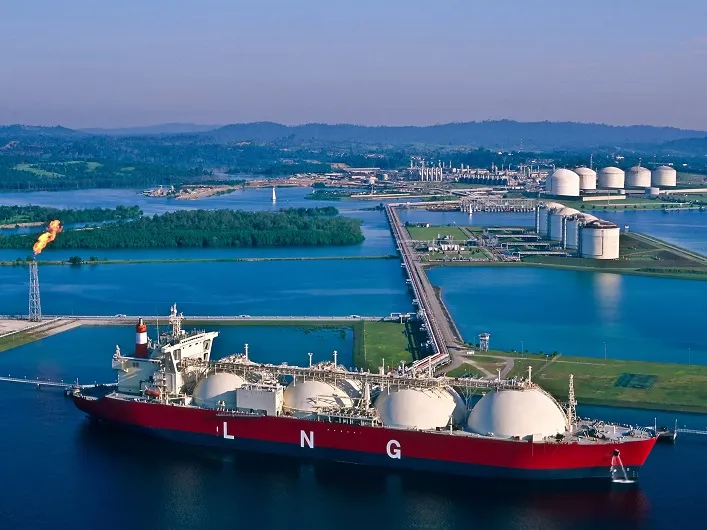
Despite Russia’s revenues from energy resource sales being 50% lower in September 2025 compared to September 2022, they continue to be bolstered by oil and gas purchases from countries in Asia, Eastern Europe, and the import of liquefied natural gas (LNG) into the European Union.
The EU currently purchases 50% of Russian LNG, while China’s share is 22%, and Japan’s is 18%. In terms of pipeline gas, the European Union remains the largest importer at 35%, followed by China (30%) and Turkey (29%).
“Although Russia’s revenues are 50% lower than the figures from September 2022, they are still supported by oil and gas purchases from buyers in Asia and Eastern Europe, as well as LNG supplies to the EU.”
Despite sanctions from the US, Moscow continues to find ways to export energy resources. In particular, Russia is using China as a mediator for supplying liquefied gas from the Arctic LNG 2 project to global markets.