

The prolonged conflict between Iran and the US in the Middle East significantly impacts the global economy and creates serious risks for the development of the artificial intelligence industry. The World Trade Organization (WTO) warns that high energy prices and potential oil supply disruptions could limit investments in the technology sector, particularly in AI.
This is reported by Business • Media
High Energy Prices Restrain Investments in AI
WTO Chief Economist Robert Staiger emphasized that further increases in oil and gas prices will make the development of the AI sector more expensive, as artificial intelligence requires vast computational power and energy resources. If the current pricing situation persists for a year, it could lead to a reduction in new investments in the industry and slow down the pace of innovation.
“The AI boom is directly dependent on energy availability. If high prices persist for a year, it could stifle investment growth in the sector.”
WTO analysts note that today, investments in artificial intelligence are primarily concentrated in the hands of large international companies. At the same time, the economic efficiency of AI technology has yet to be proven on a global scale, and market uncertainties only exacerbate the reluctance to invest in the sector.
Global Consequences for Trade and the Economy
The WTO’s report “Global Trade Outlook” outlines that the conflict in the Middle East threatens not only the development of AI but also the stability of the global economy as a whole. The potential disruptions in oil and fertilizer supplies pose a particular risk, which could negatively affect manufacturing and food markets.
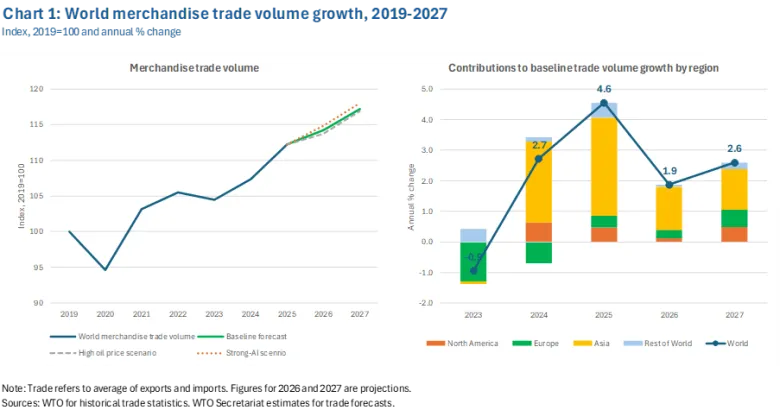
In 2025, global merchandise trade grew by 4.6%, despite stricter US trade policies and tariff increases. However, in 2026, there is a significant slowdown in this indicator to 1.9%. The WTO predicts that a prolonged period of high energy prices could further reduce the growth of global trade by an additional 0.5% and create further risks for global food security.

The organization warns that supply disruptions from Gulf countries could trigger a chain reaction in global supply chains. The current geopolitical tensions only intensify the pressure on the international trading system, while the role of the WTO is weakened against the backdrop of increasing protectionist policies and breaches of agreements by the world’s largest economies.
According to WTO estimates, in 2025, about 70% of the increase in investments in North America was attributed to goods related to artificial intelligence. Despite this, uncertainty and high energy prices could slow further industry development in 2026.